Go slowly and let smell come before sight. Keep the kitten in a separate room for the first several days, swap bedding so each cat learns the other’s scent, then feed them on either side of a closed door. Move to short, supervised meetings only when both cats eat and act relaxed. Many pairs settle in 2 to 4 weeks, some take longer, and rushing is the most common reason introductions fail.
Your older cat didn’t ask for a roommate. To them, a kitten is a stranger who smells wrong, moves fast and wants to play at 3 a.m. Cats are territorial and rely heavily on scent to feel safe, so a sudden face-to-face meeting can turn into hissing, hiding, or a grudge that lasts for months.
The good news: kittens are usually the easiest newcomers for a resident cat to accept, and a slow introduction gives you the best chance of a peaceful home. Here is the step-by-step plan.
How we researched this guide
This guide is based on feline behavior guidance from the AAFP and ISFM Feline Environmental Needs Guidelines, International Cat Care, and ASPCA advice on introducing cats, plus common patterns from experienced cat owners. It’s general information, not a substitute for advice from your vet or a qualified behaviorist.
Before kitten day: get ready
- Vet check first. Have the kitten examined, dewormed, and tested as your vet recommends (often for FeLV and FIV) before it shares space with your older cat. Make sure your resident cat’s vaccines are up to date too.
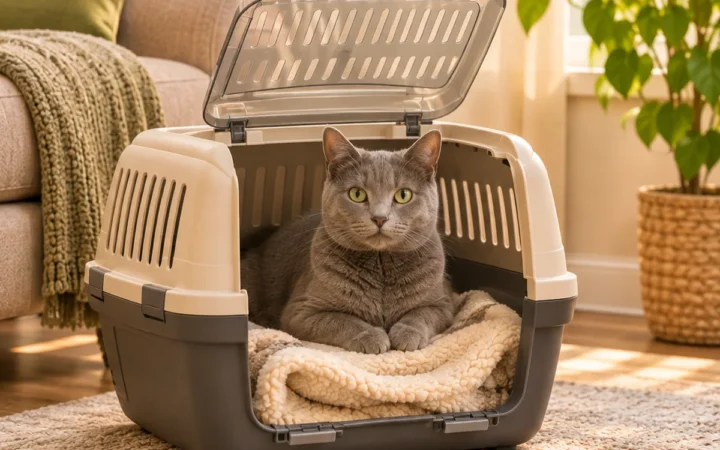
- Set up a base room for the kitten: a spare bedroom or bathroom with its own litter box, food, water, bed, scratcher and toys.
- Double the resources. A common rule is one litter box per cat plus one, in different spots, and separate food and water stations. Competition over resources is a big source of tension.
- Add vertical space like a cat tree or cleared shelves, so your older cat can watch the kitten from above and escape when they want peace.
New to kittens? Our new kitten checklist covers everything the base room needs.
How to introduce a kitten to an older cat: 7 steps
Step 1: Keep them separated (days 1 to 3, or longer)
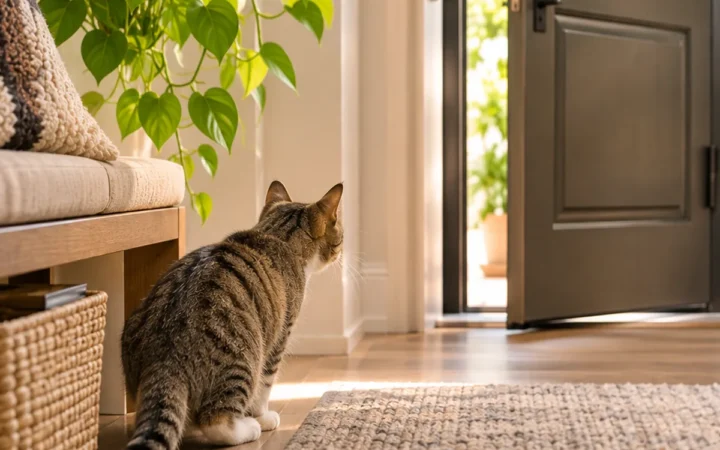
The kitten stays in its base room. Your older cat keeps the rest of the house and their normal routine. Spend time with both, and give your older cat extra play and attention so the kitten’s arrival doesn’t feel like a loss.
Step 2: Swap scents
Rub a clean sock or cloth on each cat’s cheeks and leave it near the other cat’s food or bed. Swap their blankets every day. When both cats sniff the new scent calmly, or ignore it, you’re ready to move on. Hissing at the cloth means you need more time at this step.
Step 3: Swap spaces
Once a day, let the kitten explore the house while your older cat spends some time in the base room. This spreads the kitten’s scent around and lets your resident cat investigate without any pressure.
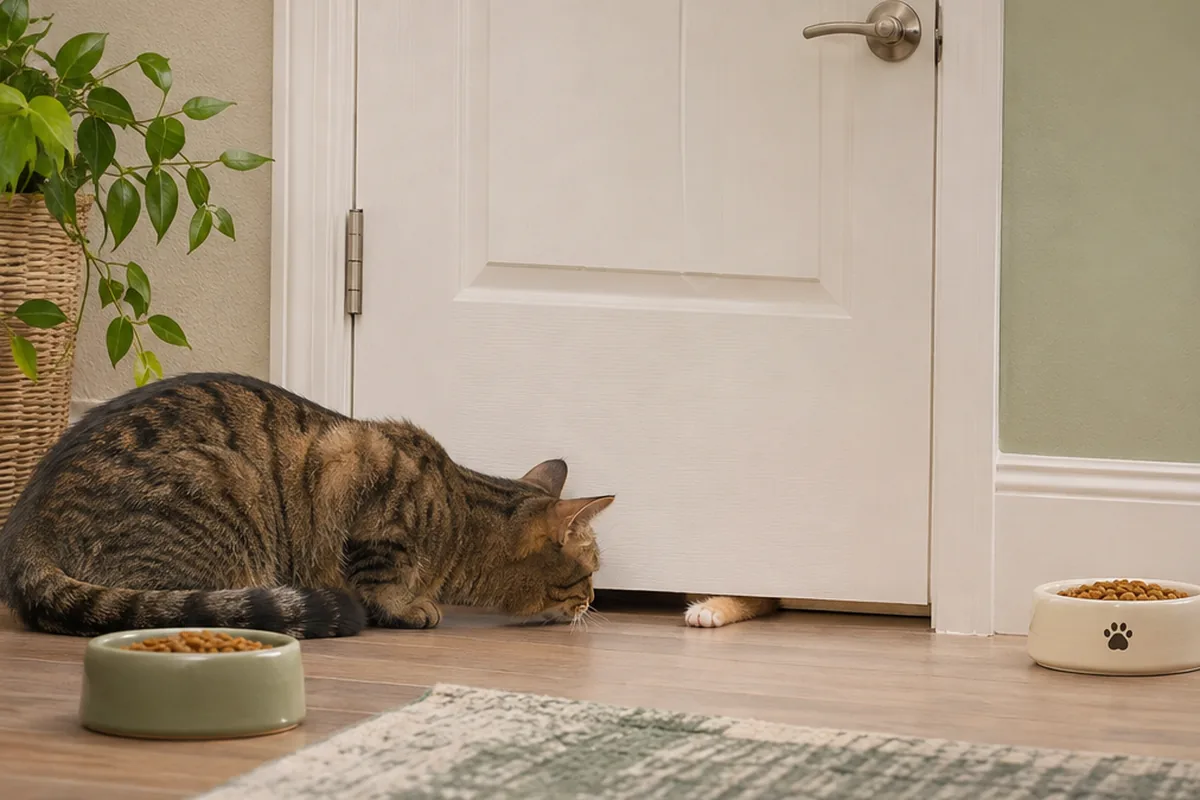
Step 4: Feed on either side of the door
Place both food bowls a few feet from the closed door, then move them a little closer each day. Food creates a positive link with the other cat’s smell and sounds. If either cat stops eating, move the bowls back.
Step 5: First look through a barrier
Swap the closed door for a tall baby gate, a screen door, or a door opened just a crack and wedged so it can’t open further. Keep sessions short, a few minutes, and pair them with food or play. End before anyone gets tense.
Step 6: Short, supervised meetings
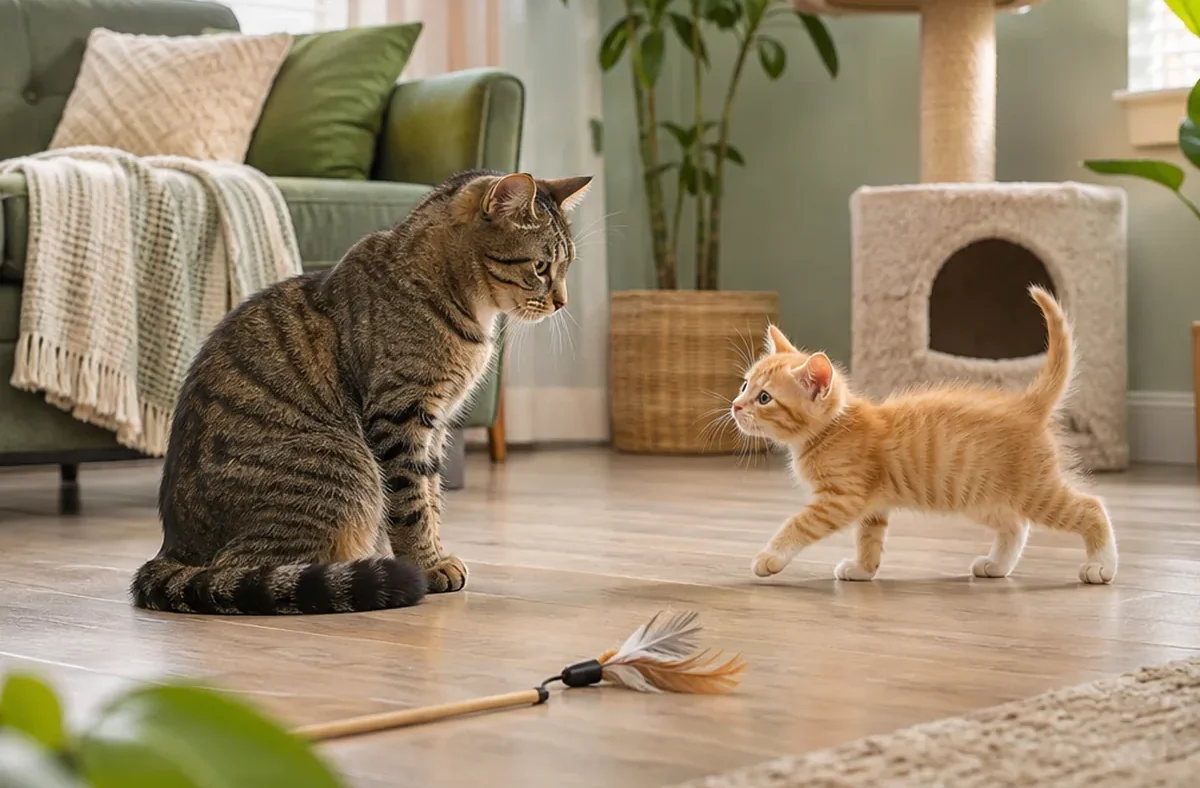
When both cats are relaxed at the barrier, let them share a room for 5 to 10 minutes. Use a wand toy to keep the kitten busy so it doesn’t pounce on your older cat. Give treats to both. Make sure your older cat has an easy escape route and a high place to retreat to. Slowly make these sessions longer.
Step 7: Unsupervised time, gradually
Leave them together alone only after several calm meetings in a row. For the first few weeks, return the kitten to its base room when you’re out or asleep.
Tire out the kitten first. A 10-minute play session before each meeting means a calmer kitten that’s less likely to ambush your older cat.
How long does it take?
There’s no fixed timeline. Some cats are curious and friendly within a week. Many pairs need 2 to 4 weeks of gradual steps. Shy or older cats can take a couple of months to fully relax. Let the slower cat set the pace. Going back a step is normal, not a failure.
Normal behavior vs. warning signs
Normal at first: some hissing, growling, staring, a swat without claws, your older cat avoiding the kitten or walking away. These usually fade as the cats get used to each other.
Slow down if you see:
- Flattened ears, puffed tail and body, or loud yowling
- Chasing that doesn’t stop, or one cat cornering the other
- Your older cat hiding all day, not eating, or peeing outside the litter box
- Fights with real biting or fur flying
If things go badly, separate the cats calmly (put a cushion or board between them, never your hands) and go back to the scent and feeding steps for a few days.
Special cases
Introducing a kitten to a senior cat
Senior cats often have less patience for a kitten’s energy, and they may have arthritis that makes jumping away harder. Give them ground-level escape spots, keep their favorite resting places kitten-free, and protect their quiet time. Consider getting two kittens so they play with each other instead of pestering your senior. Our guide to the best beds for senior cats has comfortable, easy-to-reach options.
Your older cat had been an only cat for years
Cats that have lived alone for a long time may take longer to adjust. Stick with each step longer, and keep your older cat’s routine (meals, play, lap time) exactly the same.
You also have a dog
Introduce the kitten to one pet at a time. Keep the dog on a leash for early meetings and make sure the kitten always has a high, dog-free escape route.
Talk to your vet if your older cat stops eating for more than a day, hides constantly, pees or poops outside the box, overgrooms, or if fights cause wounds. Stress can trigger health problems in cats, and a vet or qualified feline behaviorist can help with persistent conflict. This guide is general information, not veterinary advice.
FAQ
How long does it take for an older cat to accept a kitten?
Often 2 to 4 weeks with a gradual introduction, but some cats need a couple of months. Let the more nervous cat set the pace.
Should I let my older cat and kitten fight it out?
No. Letting them “sort it out” often creates lasting fear and aggression. Separate them calmly and go back a step.
Is it normal for my older cat to hiss at the new kitten?
Yes. Hissing is a warning, not an attack, and it’s very common in the first days. It’s a sign to slow down, not to give up.
Will my older cat be jealous of the kitten?
Cats can get stressed when their routine and resources change. Keep your older cat’s routine the same, give them extra attention, and make sure they never have to share litter boxes, food bowls or favorite spots.
Is it better to get one kitten or two?
Two kittens often burn off energy playing with each other, which can take pressure off an older or senior cat. It depends on your space, budget and your resident cat’s temperament.
Sources
- Ellis SLH, Rodan I, Carney HC, et al. AAFP and ISFM Feline Environmental Needs Guidelines. Journal of Feline Medicine and Surgery (2013).
- International Cat Care, guidance on introducing a new cat to a resident cat.
- ASPCA, advice on introducing cats to each other.
- Little S, Levy J, Hartmann K, et al. 2020 AAFP Feline Retrovirus Testing and Management Guidelines. Journal of Feline Medicine and Surgery (2020).

PurrScout Editorial Team
We research cat products and care topics using manufacturer documentation, veterinary guidance and thousands of real owner reviews. We never claim hands-on testing we didn't do. How we research.