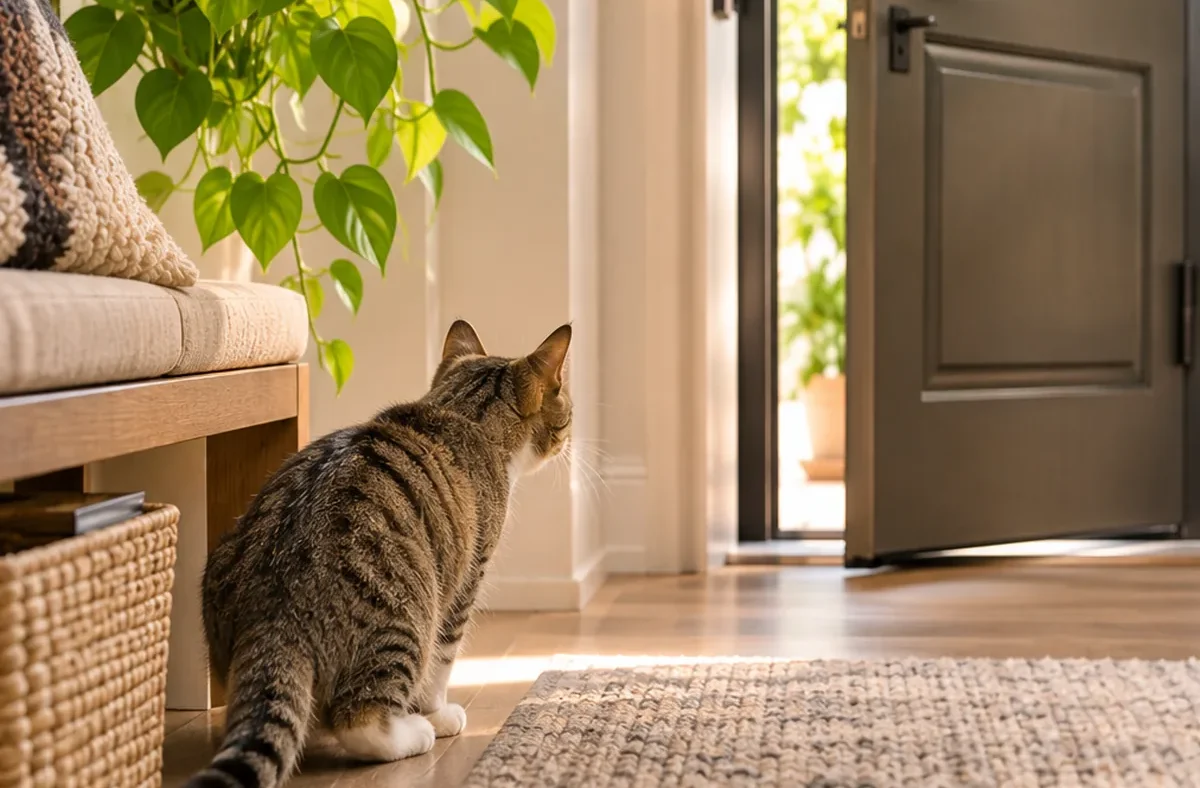
Make the door boring and the inside interesting. Toss a treat or toy away from the door every time you leave or come in, so your cat learns to run the other way. Use a “two-door” setup (a closed room or a barrier) when possible, give your cat more play and window time so they’re less curious about outside, and make sure they’re microchipped and wearing ID in case they ever slip out.
“Door dashers” aren’t being naughty. Some are curious, some are bored, some smell or see something outside, and some have simply learned that the door opening is the most exciting thing that happens all day. The fix is a mix of routine, training and simple barriers.
How we researched this guide
This guide is based on feline behavior and environmental needs guidance (AAFP/ISFM), shelter and rescue lost-cat research, and veterinary recommendations on microchipping. Products mentioned are based on specs and owner reviews, not our own testing.
Why indoor cats try to escape
- Curiosity and boredom: the outside world has smells, sounds and movement.
- Hunting drive: birds and bugs seen through the door.
- Mating instincts: unneutered cats are much more driven to get out.
- Territory: another cat outside can trigger the urge to confront or follow.
- Learned habit: it worked once, and it was exciting.
12 ways to keep a cat from escaping out the door
1. Spay or neuter
Hormones are one of the strongest drives to roam. Spaying or neutering reduces it a lot.
2. Use the treat toss
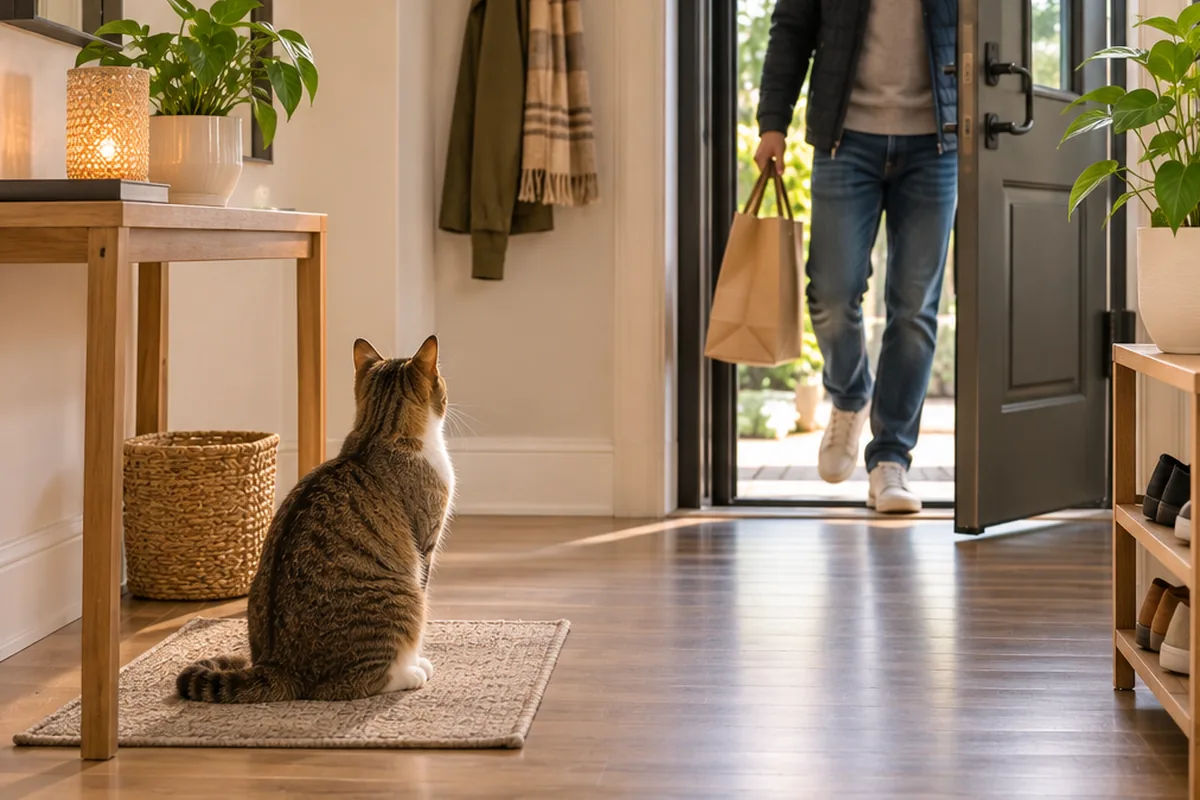
Before you open the door, toss a treat or a favorite toy away from it. Over time, the door opening becomes a cue to run inside.
3. Create a greeting spot away from the door
Put a cat tree or a mat a few feet from the door and reward your cat for waiting there. Greet them there, not at the threshold.
4. Make a “two-door” airlock
If you have an entry hallway or vestibule, keep the inner door closed when you go out. In an apartment, a tall pet gate or a closed bedroom door during deliveries does the same job.
5. Make the doorway less inviting
A plastic carpet runner (spiky side up) or a textured mat at the door makes some cats avoid the area. Never use anything that could hurt your cat.
6. Leave and arrive calmly
Big goodbye and hello routines at the door make it the most exciting place in the house. Keep it low-key.
7. Burn energy first
A 10-minute play session before you leave in the morning and right after you get home takes the edge off. See how to keep an indoor cat entertained while you’re at work.
8. Bring the outdoors in
A window perch, cat grass and a bird feeder outside a window give curious cats something to watch. See our indoor enrichment ideas.
9. Tell everyone in the house
Kids, roommates, guests, delivery people and contractors are the biggest escape risk. A small sign on the inside of the door (“Watch the cat!”) helps. During parties or repairs, put your cat in a closed room with food, water and litter.
10. Secure windows and balconies
Standard window screens aren’t designed to hold a cat. Use sturdy pet-resistant screens or window guards, and never leave a cat unsupervised on a balcony unless it’s fully enclosed with cat netting. High-rise falls are a common cause of serious injuries in cats.
11. Offer safe outdoor time
A fully enclosed catio, or harness walks for confident cats, can satisfy outdoor curiosity safely. Train harness use slowly indoors first.
12. Microchip and ID, always
Even careful homes have accidents. A microchip with up-to-date contact details plus a breakaway collar with an ID tag, like this reflective breakaway collar, greatly improves the chance of getting your cat back.
What to do if your indoor cat gets out
- Search close to home first. Indoor cats who get out usually hide nearby, often within a few houses, under porches, decks, cars and bushes. Research on lost cats found most indoor-only cats were found close to home.
- Search quietly at dusk and at night with a flashlight. Look for eye shine, and call softly.
- Put the litter box or your cat’s bedding outside the door (if safe), and leave the door area quiet.
- Tell neighbors and ask them to check sheds and garages.
- Post on local lost-pet groups and contact local shelters, and confirm your microchip details are current.
- Use a humane trap if your cat is too scared to come to you. Many shelters lend them.
After a cat comes home, check for injuries, ticks and fleas, and call your vet if your cat seems hurt, isn’t eating, or was out for more than a day or two. This guide is general information, not veterinary advice.
FAQ
How do I stop my cat from running out the front door?
Toss a treat away from the door before opening it, give them a greeting spot further inside, keep arrivals calm, and use a barrier or closed inner door when you can.
Will my indoor cat come back if it escapes?
Many do, but indoor cats often hide silently nearby instead of coming home. Search close to home, especially at night, rather than waiting.
Are cat-proof screens worth it?
Yes, if you open windows. Standard screens tear or pop out easily. Pet-resistant screens and secure window guards are much safer.
Is it cruel to keep a cat indoors?
No. Indoor cats avoid traffic, predators and many diseases. They do need enrichment, play and things to watch to stay happy.
Sources
- Huang L, et al. Search methods used to locate missing cats and locations where missing cats are found. Animals (2018).
- Lord LK, et al. Search and identification methods that owners use to find a lost cat. Journal of the American Veterinary Medical Association (2007).
- Ellis SLH, Rodan I, et al. AAFP and ISFM Feline Environmental Needs Guidelines (2013).
- American Veterinary Medical Association, microchipping of animals.

PurrScout Editorial Team
We research cat products and care topics using manufacturer documentation, veterinary guidance and thousands of real owner reviews. We never claim hands-on testing we didn't do. How we research.