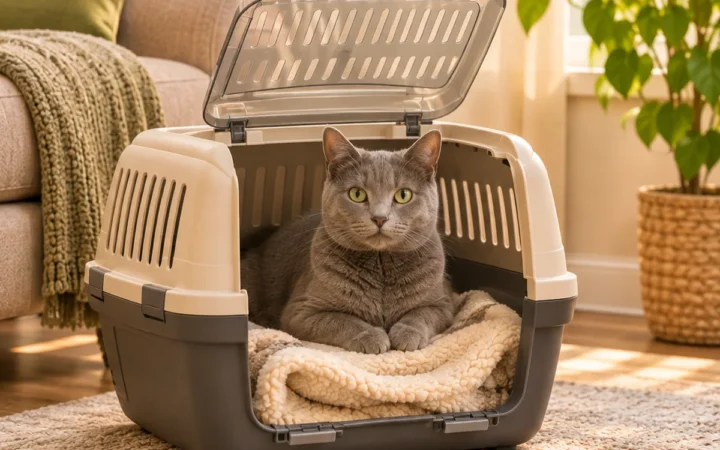
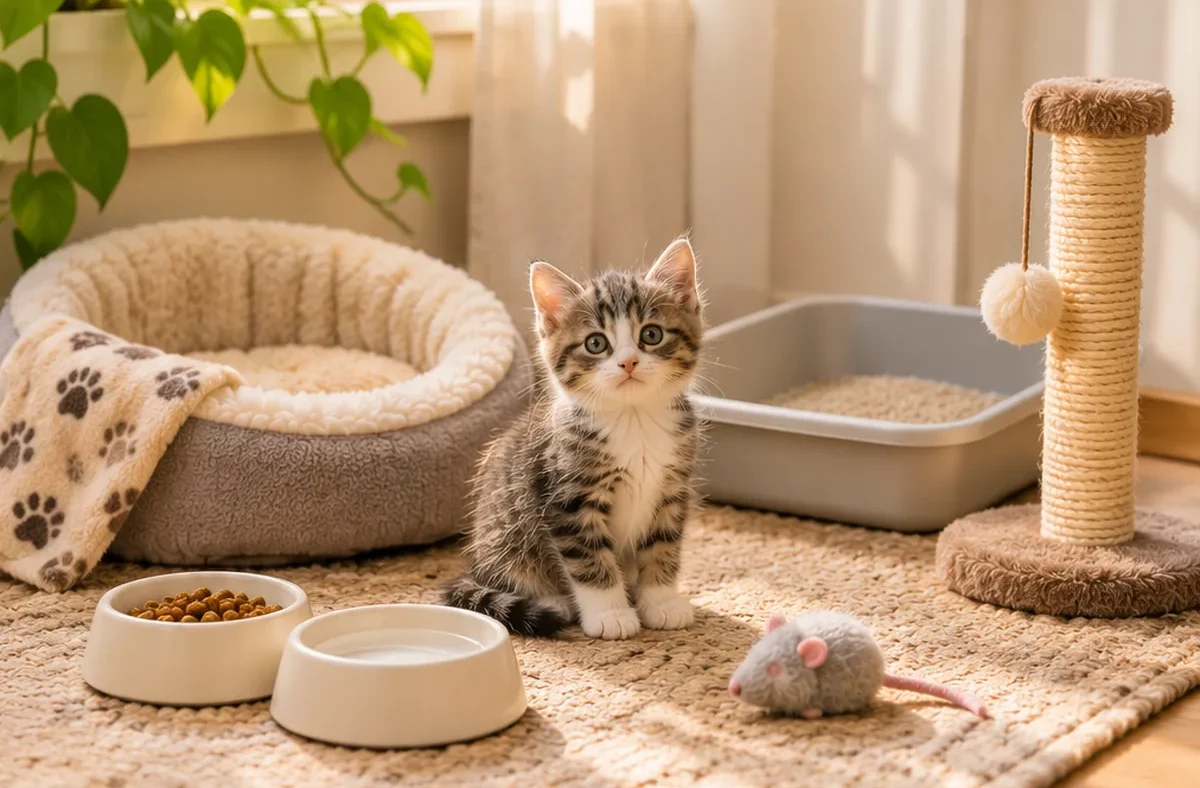
Day-one essentials: a carrier, kitten food (the same one they’re eating now), shallow food and water bowls, a litter box with low sides, unscented litter, a scratching post, a few safe toys, and a cozy bed or box. Set up one quiet room as a “base camp,” and book a vet visit for the first week. Almost everything else can wait.
Bringing home a kitten is exciting, and it’s easy to buy half the pet store. Kittens need less than you think on day one, but a few things really matter: a safe space, the right food, a litter setup they can use, and an early vet visit.
How we researched this guide
This checklist is based on AAHA/AAFP feline vaccination and life stage guidelines, AAFP environmental needs guidelines, ASPCA poison control resources and Cornell Feline Health Center guidance. Product suggestions are based on specs and owner reviews, not our own testing.
The essentials (get these before kitten day)
Carrier
You need it to bring your kitten home and for vet visits. A hard carrier that opens from the top makes vet visits much easier. The Amazon Basics two-door top-load carrier is a popular, sturdy option. See our guide to carriers for anxious cats.
Food
Start with exactly what your kitten eats now (ask the shelter or breeder), and change gradually over a week or more if you want to switch. Choose a food labeled as complete and balanced for growth or “all life stages.” Kittens eat several small meals a day.
Shallow food and water bowls
Wide, shallow bowls are easiest for small faces. Stainless steel or ceramic are easy to clean. A set like these whisker-friendly stainless steel bowls works well. Keep water away from the food bowl, since many cats prefer it that way.
Litter box with a low entry
Kittens need to climb in easily. A small open box or a large box with a low front works well. Put it in a quiet spot away from food.
Litter
Use an unscented litter. Many vets suggest avoiding clumping clay for very young kittens who might eat litter, so ask your vet what they prefer for your kitten’s age. Our low-dust litter guide covers unscented options.
Scratching post
Start good habits early. A sturdy sisal post, like the SmartCat Ultimate Scratching Post, grows with your kitten. Add a cheap cardboard scratcher too.
A few safe toys
A wand toy for play with you, plus a couple of balls and a kicker toy for solo play. Put wand toys away after use. See our interactive toy guide.
Bed and hiding spots
A soft bed and a cardboard box with a blanket. Hiding spots help nervous kittens settle much faster.
Nice to have (first month)
- Nail clippers made for cats, like these Pet Republique cat nail clippers. Start handling paws early.
- A soft brush or grooming glove to get your kitten used to grooming.
- A breakaway collar with an ID tag, like this reflective breakaway collar, plus a microchip (ask your vet).
- A cat tree or shelves for climbing. See cat trees for small spaces.
- A litter mat. Kittens are messy diggers. See litter mats that work.
- Enzyme cleaner for accidents.
What you can skip (for now)
- Automatic litter boxes: most aren’t safe or recommended for small kittens. Check the maker’s minimum weight.
- Expensive cat furniture before you know what your kitten likes.
- Lots of toys: a handful, rotated, is better.
- Scented litter, air fresheners near the box, and perfumed sprays.
- Milk: most cats are lactose intolerant. Water and kitten food are all they need.

Kitten-proof your home
- Strings, hair ties, rubber bands, ribbon, thread and dental floss: dangerous if swallowed.
- Electrical cords: tidy them, or use cord protectors.
- Toxic plants: all true lilies are extremely toxic to cats, even pollen. Check the ASPCA plant list for everything else.
- Medications and cleaning products: lock them away.
- Toilet lids down, and check washers, dryers and recliners before using them.
- Window screens: secure, and never leave a kitten near an open window. See how to keep a cat from escaping.
- Small gaps: behind appliances and under cabinets, where kittens can get stuck.
The first week plan
- Day 1: set up one quiet room with food, water, litter, bed, hiding spot and toys. Let your kitten explore it at their own pace.
- Days 2 to 4: short visits, gentle play, treats. Let them come to you.
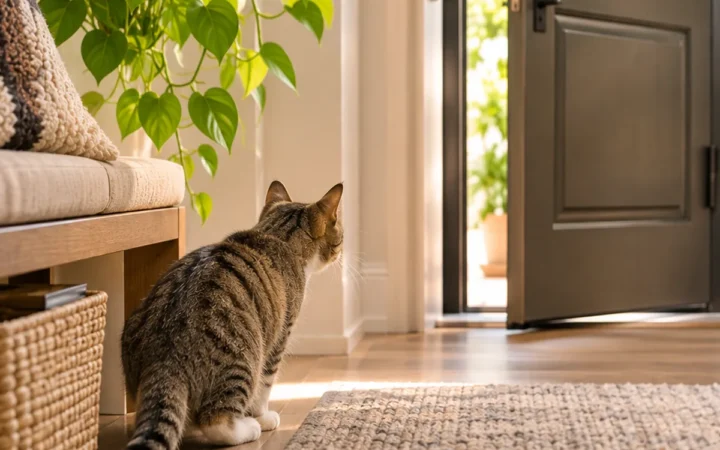
- Days 3 to 7: once your kitten is eating, using the litter box and relaxed, open the door to more of the home, a room at a time.
- Within the first week: first vet visit.
- Other pets: introduce slowly, by scent first, over days to weeks.
Vet visits and vaccines
- First visit: a general check, weight, parasite check and deworming plan, flea treatment if needed, and testing for FeLV/FIV as your vet recommends.
- Core vaccines: under AAHA/AAFP guidelines, the FVRCP series usually starts at 6 to 8 weeks and is repeated every 3 to 4 weeks until about 16 to 20 weeks of age. Rabies is given as your vet and local law require.
- Spay or neuter: commonly recommended by about 5 months of age. Ask your vet.
- Microchip: quick, and it’s often done with the spay or neuter.
Call your vet promptly if your kitten stops eating, has diarrhea or vomiting for more than a day, seems very sleepy or weak, has trouble breathing, or has a swollen belly. Kittens can get sick quickly. This guide is general information, not veterinary advice.
FAQ
What do I need for a kitten on the first day?
A carrier, the food they’re used to, shallow bowls, a low litter box with unscented litter, a scratching post, a bed or hiding box, and a couple of safe toys.
When should I take my new kitten to the vet?
Within the first few days to a week, even if they had shots at the shelter. Bring any records you were given.
Should my kitten have the run of the house right away?
No. Start in one room so your kitten can learn where the litter box and food are and feel safe. Expand gradually.
How many times a day should a kitten eat?
Young kittens usually eat 3 to 4 small meals a day. Follow the food’s feeding guide and your vet’s advice for your kitten’s age and weight.
Sources
- Stone AE, et al. 2020 AAHA/AAFP Feline Vaccination Guidelines. Journal of Feline Medicine and Surgery (2020).
- Quimby J, et al. 2021 AAHA/AAFP Feline Life Stage Guidelines. Journal of Feline Medicine and Surgery (2021).
- Ellis SLH, Rodan I, et al. AAFP and ISFM Feline Environmental Needs Guidelines (2013).
- ASPCA Animal Poison Control Center, toxic and non-toxic plants list.
- Cornell Feline Health Center, caring for a new kitten.

PurrScout Editorial Team
We research cat products and care topics using manufacturer documentation, veterinary guidance and thousands of real owner reviews. We never claim hands-on testing we didn't do. How we research.