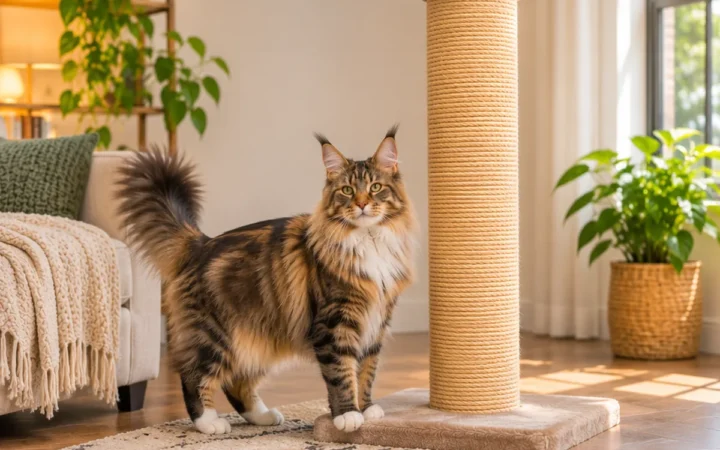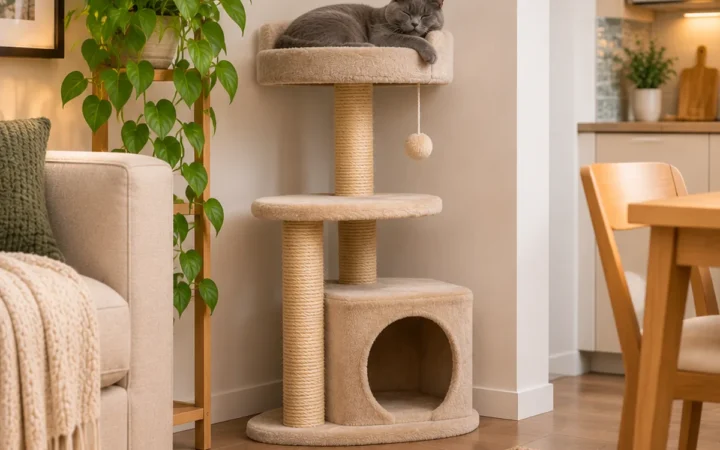

Scratching is normal and necessary, so the goal is to redirect it, not stop it. A sudden increase usually means something changed (stress, a new pet, new furniture) or your cat’s current post isn’t good enough. Put a tall, heavy, sisal-covered post right next to the furniture they’re scratching, make the furniture unappealing for a few weeks, and reward every scratch on the post.
If your cat ignored the sofa for years and is now shredding it, there’s a reason. Cats scratch to keep their claws healthy, to stretch, and to leave scent and visual marks that say “this is my place.” When something about their world changes, marking often increases. When the scratching options are poor, they pick the best surface available, which is often your furniture.
How we researched this guide
This guide is based on published research on cat scratching behavior and preferences, AAFP guidance, and feline environmental needs guidelines. Product suggestions link to our separate, research-based buying guides.
7 reasons your cat suddenly started scratching furniture
1. Something changed at home
A move, a new pet or baby, visitors, a new schedule or even rearranged furniture can make cats feel less secure. Scratching leaves scent from glands in their paws, which helps them feel the space is theirs again.
2. There’s a cat outside the window
Seeing a neighborhood cat can trigger marking near doors and windows. Scratching often appears close to where your cat sees the intruder.
3. New furniture smells and feels great
A new sofa or rug has an unfamiliar smell and often a tempting texture. Cats like to mark new things.
4. The scratching post isn’t good enough
This is the most common fixable cause. In a large survey of cat owners, cats preferred posts that were tall (about 3 feet or more), sturdy, upright and covered in sisal rope. Short, wobbly, carpet-covered posts often get ignored, and an armchair beats them easily.
5. The post is in the wrong place
Cats scratch where it matters to them: near where they sleep, near room entrances, and in the main living area. A post hidden in a spare room won’t compete with the sofa.
6. Boredom or attention
If scratching the sofa makes you jump up and react, your cat learns it works. Cats with too little play also burn energy this way.
7. Claws need maintenance
Scratching pulls off the old outer layer of the claw. Overgrown claws can make cats scratch more, and in older cats, claws can grow thick and curl.
How to stop your cat scratching furniture: step by step
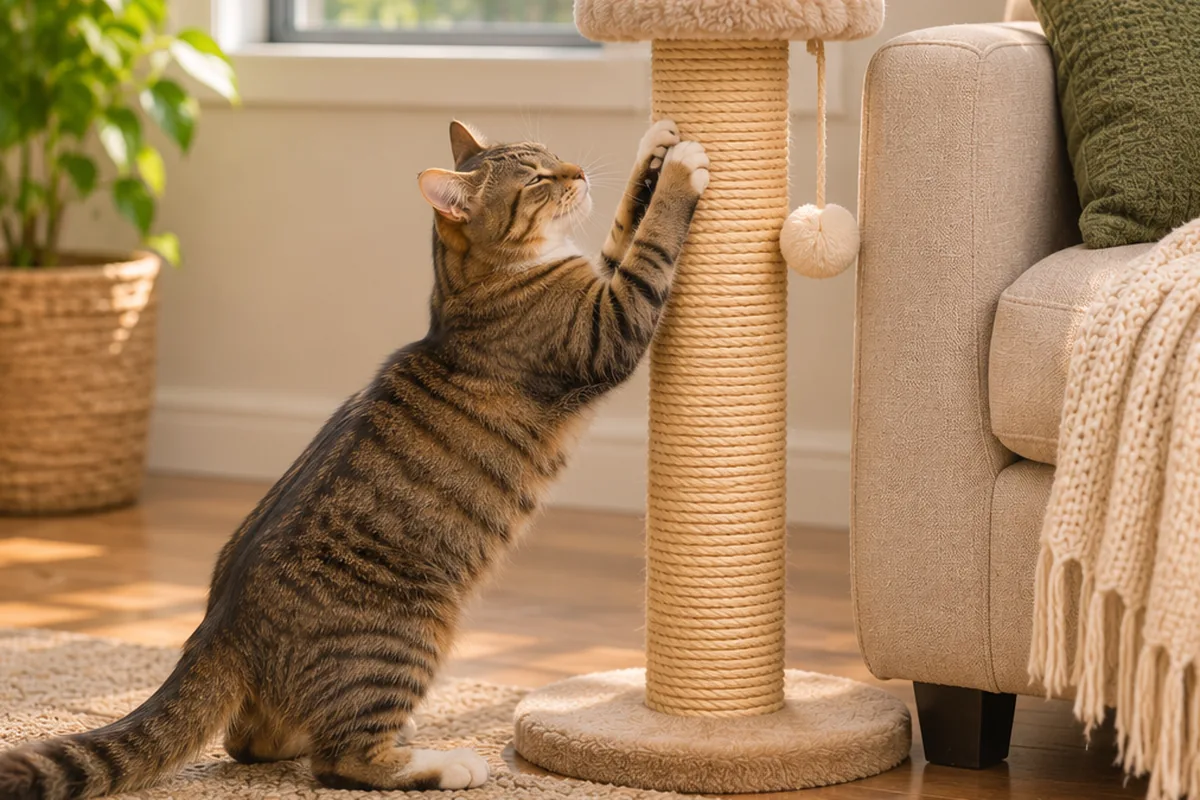
- Get the right post. Taller than your cat stretched out, heavy enough not to move, covered in sisal rope. Our scratching post guide compares good options.
- Add a horizontal option too. Some cats prefer scratching flat, like on a rug. A cardboard scratcher on the floor covers that.
- Place it right next to the damaged spot. Literally beside the sofa arm. You can move it a little at a time later.
- Make the furniture less appealing for a few weeks. Cover the spot with a throw, double-sided tape made for furniture, or a clear plastic guard.
- Make the post more appealing. Rub a little catnip or silvervine on it, play with a wand toy around it, and give a treat when your cat scratches it.
- Never punish. Yelling or spraying water makes cats anxious, which can increase marking. Calmly pick them up and place them at the post instead.
- Keep claws trimmed every couple of weeks. Soft nail caps are another option some owners use.
- Reduce stress with more play, more vertical space and hiding spots. Some owners also use synthetic feline pheromone products designed to encourage scratching on posts.
Multi-cat home? Give each cat several scratching spots, especially near doorways and resting areas. Competition for resources can increase marking.
Is declawing an option?
Declawing is the amputation of the last bone of each toe, not a nail trim. The AAFP and AVMA strongly discourage it as an elective procedure, and it’s banned in some US states and cities. Redirecting scratching works for the vast majority of cats.
See your vet if the scratching comes with other changes, like hiding, aggression, peeing outside the box, overgrooming, limping, or a change in appetite. Stress and pain can show up as behavior changes. Older cats with thick or ingrown claws may need help trimming. This guide is general information, not veterinary advice.
FAQ
Why is my cat scratching the furniture all of a sudden?
Usually because something changed (stress, a new pet, new furniture, a cat outside) or because their scratching post isn’t tall, sturdy or close enough to compete.
Why does my cat scratch furniture instead of the scratching post?
The furniture is often taller, heavier and in a better spot. Most cats prefer a tall, sturdy, sisal-covered post placed where they already scratch.
Why does my cat scratch the furniture when I come home or at night?
Scratching is part of greeting and marking, and cats often scratch after waking up. It can also be a way to get your attention. Play first, then reward scratching on the post.
What smells stop cats from scratching furniture?
Many cats dislike citrus smells, but scent sprays are hit and miss. Covering the spot and offering a better post nearby works more reliably.
Sources
- Wilson C, Bain M, DePorter T, Beck A, Grassi V, Landsberg G. Owner observations regarding cat scratching behavior: an internet-based survey. Journal of Feline Medicine and Surgery (2016).
- Mengoli M, Mariti C, Cozzi A, et al. Scratching behaviour and its features: a questionnaire-based study in an Italian sample of domestic cats. Journal of Feline Medicine and Surgery (2013).
- American Association of Feline Practitioners, position statement on declawing.
- Ellis SLH, Rodan I, et al. AAFP and ISFM Feline Environmental Needs Guidelines (2013).

PurrScout Editorial Team
We research cat products and care topics using manufacturer documentation, veterinary guidance and thousands of real owner reviews. We never claim hands-on testing we didn't do. How we research.