
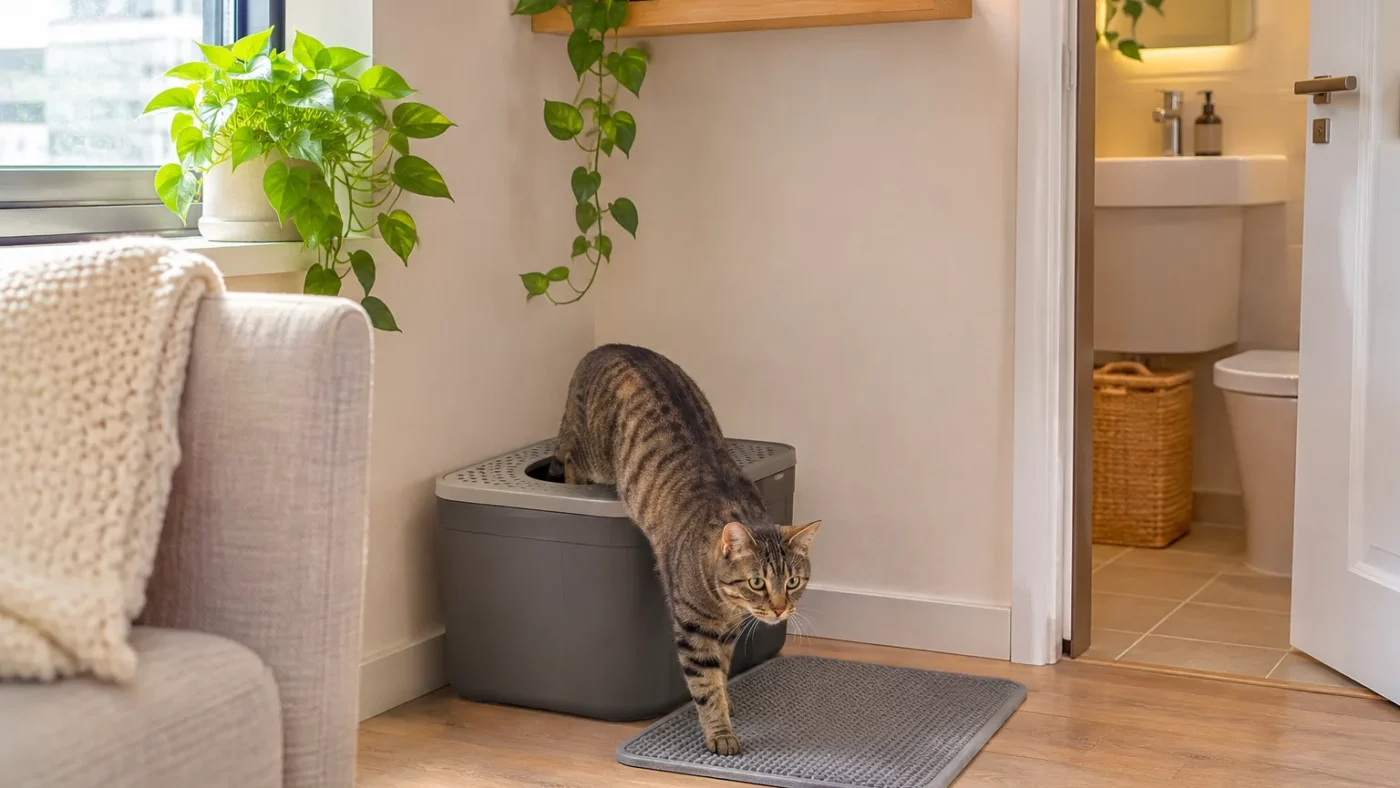
For most small apartments, a top-entry box like the IRIS USA Top Entry (Large) is the best balance of small footprint and low mess, because the litter that sticks to paws falls back in through the grated lid. If your cat is a senior, a kitten, or just won’t jump, go with an open, high-sided pan like the IRIS High Sided Scatter Shield instead. Whatever you buy, measure your cat first. Size matters more than style.
Living with a cat in 500 square feet comes down to three problems: where the box goes, how much litter ends up on the floor, and whether the whole place smells like it. A good apartment litter box helps with all three, but only if it still fits your cat. A box that’s too small is the most common reason cats start going on the bath mat.
We compared the dimensions, entry styles and long-term owner feedback of the most popular space-saving litter boxes on Amazon, then checked them against the litter box guidelines published by the American Association of Feline Practitioners (AAFP). Here’s what’s actually worth your floor space.
How we researched this guide
We compared 20+ litter boxes marketed for small spaces using manufacturer dimensions (checked on Amazon in November 2026), read through owner reviews with a focus on recurring complaints (lids, leaks, size), and cross-checked sizing and placement advice against AAFP/ISFM guidelines and a peer-reviewed study on covered boxes. We did not physically test these boxes. We tell you who each one is right for and who should skip it.
Our picks at a glance
First, measure your cat (this is the step everyone skips)
The AAFP and ISFM house-soiling guidelines recommend a litter box that’s at least 1.5 times the length of your cat, measured from the nose to the base of the tail. An average adult cat is around 18 inches long by that measure, which works out to a box of about 27 inches.
Here’s the honest part most “small apartment” lists leave out: almost every commercial litter box, including every box in this guide, is shorter than that. “Large” boxes usually run 19 to 21 inches. That’s fine for many cats, but it means you shouldn’t shrink the box any further to save space. For small apartments, save space by choosing a smarter shape and spot (top entry, corner, hidden in furniture), not by buying a smaller box.
- Cat under about 13 inches long (nose to tail base): most boxes here fit comfortably.
- Cat 14 to 18 inches: stick to the largest size of any box, and look for the longest interior.
- Big cat (Maine Coon, large male): consider a large open storage tote with a cut-out entry. It’s not pretty, but it’s often the only thing long enough.
The best litter boxes for small apartments
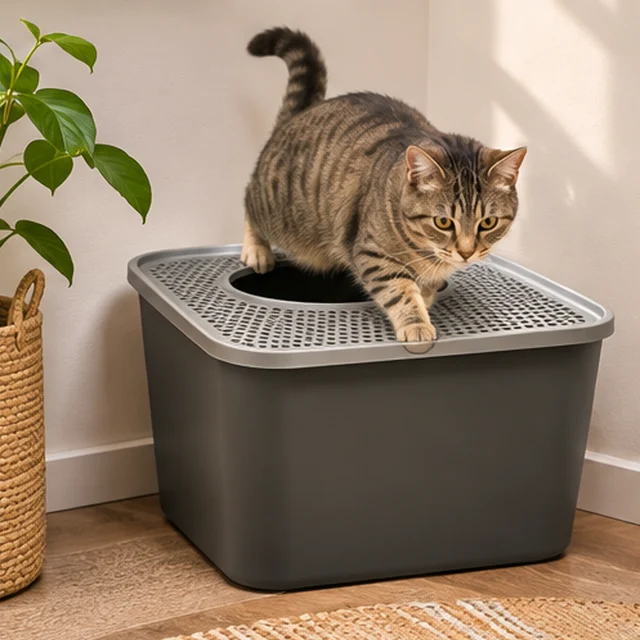 Style shown, not the exact product
IRIS USA Top Entry Cat Litter Box (Large)
- Size20.8″ x 16.1″ x 14.6″
- EntryTop (grated lid)
The top-entry design is the reason this box suits apartments so well. Cats hop in through the lid and climb back out over a grooved surface, so a lot of the litter stuck to their paws falls back inside instead of being tracked across your floor. The tall solid walls also stop kicked litter and spraying, and because the box is closed on all sides, it looks more like a storage bin than a litter box.
What owners like
- Very little litter on the floor
- Doesn’t look like a typical litter box
- Most cats take to it quickly
Watch out for
- Some owners say the lid doesn’t lock firmly in place
- Jumping in and out isn’t for every cat
- You scoop through the top, which takes a little getting used to
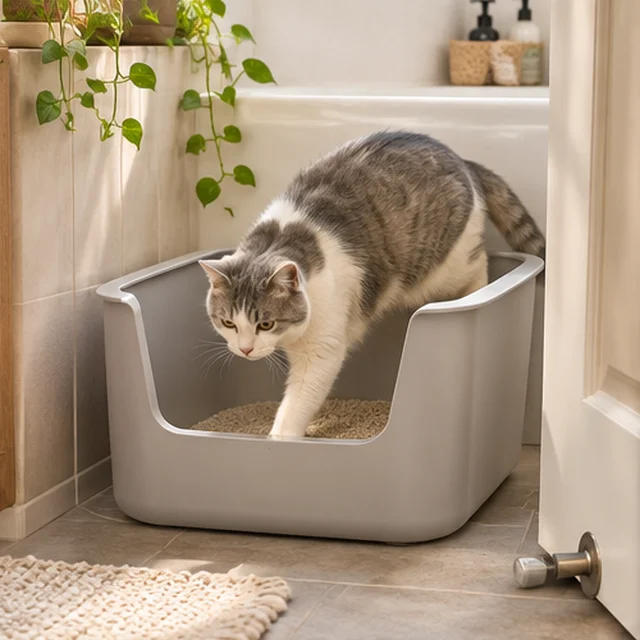
Style shown, not the exact productIRIS USA High Sided Cat Litter Box, Scatter Shield (Large)
- Size19″ x 15″ x 11.8″
- EntryOpen top, lower front
An open box is the easiest for cats to use, and it’s what many cats prefer. This one adds a removable high-sided shield around the back and sides to catch kicked litter, with a lower front so cats can step in instead of jump. Open boxes also let odor escape rather than concentrating it inside, which pushes you to scoop daily. That’s a good habit in a small space anyway.
What owners like
- High sides keep litter in
- Easy for cats to walk into
- Inexpensive
Watch out for
- The shield can pop off on some units
- Mixed reports on size for large cats
- Open top means no odor containment
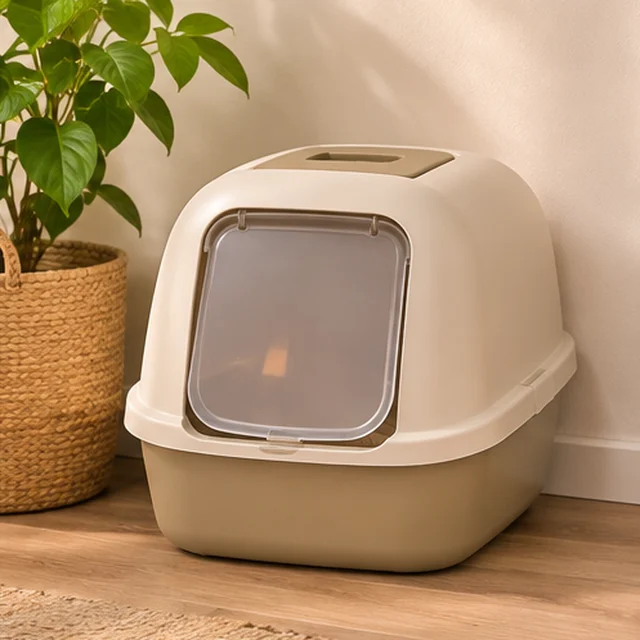
Style shown, not the exact productAmazon Basics No-Mess Hooded Litter Box
- Size20.7″ x 15.8″ x 15″ (Standard); 24″ x 18″ x 17″ (Large)
- EntryFront, swinging door
If you want a classic covered box, this is a simple, well-reviewed one. The hood and swinging door give shy cats privacy and keep litter inside, and owners say you can scoop without taking the hood off. It also comes in a Large size, which matters: if you can fit 24 inches of floor, buy the Large. Your cat will use more of that extra length than you’d think.
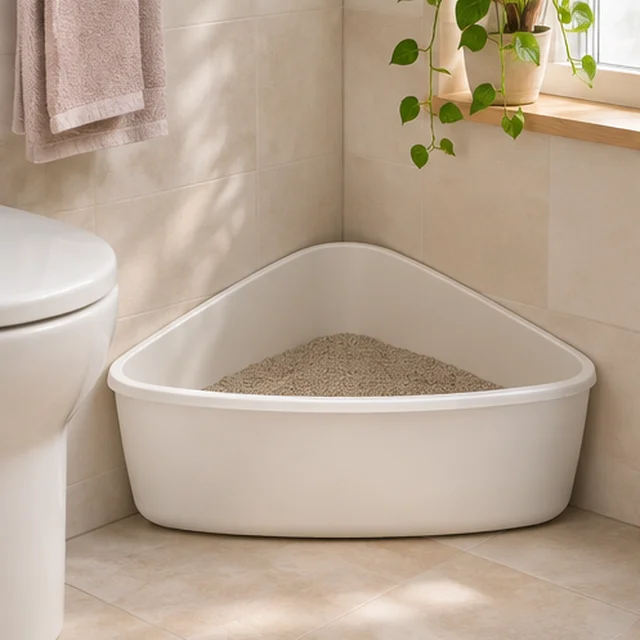
Style shown, not the exact productIRIS USA Large Corner Litter Box
- Size21″ x 16.1″ x 14.3″ (triangular)
- EntryFront, fold-up door
Corners are the least useful floor space in a studio or bathroom, and this triangular box is built to sit in one. It’s covered, with a door that folds up for cleaning. It’s the right pick when the only spot left is that awkward corner beside the toilet or behind a door.
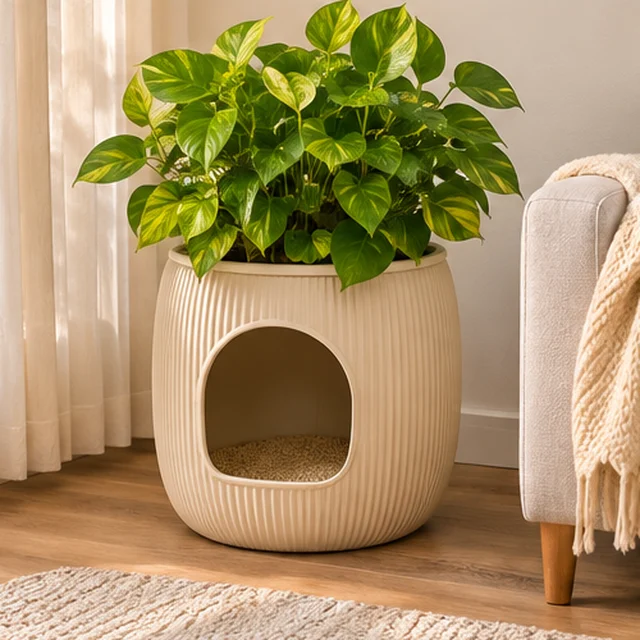 Style shown, not the exact product
Lifewit Hidden Plant Litter Box
- Size18.9″ x 18.9″ x 19.7″
- EntrySide opening
In a one-room apartment, sometimes the box has to live in the living room. This one is shaped like a large potted plant with faux leaves on top, so guests usually don’t notice it. Owners say the inside is roomy, and it’s one of the few disguised boxes with a solid review record.
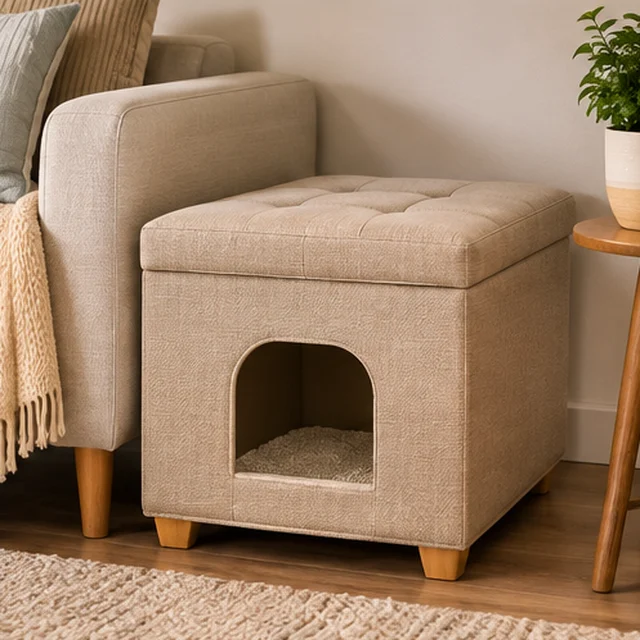 Style shown, not the exact product
Fecuria 3-in-1 Litter Box Enclosure Ottoman
- Size25″ x 19″ x 19″
- EntrySide opening
This is a foldable enclosure that hides a regular litter box inside and works as an ottoman or footrest on top. In a small apartment, getting a seat and a hidden box out of the same floor space is a real win. Owners like that it’s quick to set up and keeps litter dust contained.
Covered or open: which is better in an apartment?
Covered boxes hide the mess and some odor from you, but not from your cat, who is inside with it. A 2013 study in the Journal of Feline Medicine and Surgery gave cats a choice between covered and uncovered boxes and found that, as a group, they showed no clear preference. Individual cats did have strong opinions, though.
Our practical take: if your cat already uses a covered box happily, a covered or top-entry box is great for an apartment. If you’re starting fresh, or your cat has ever peed outside the box, start with an open box and add a cover later if it goes well.
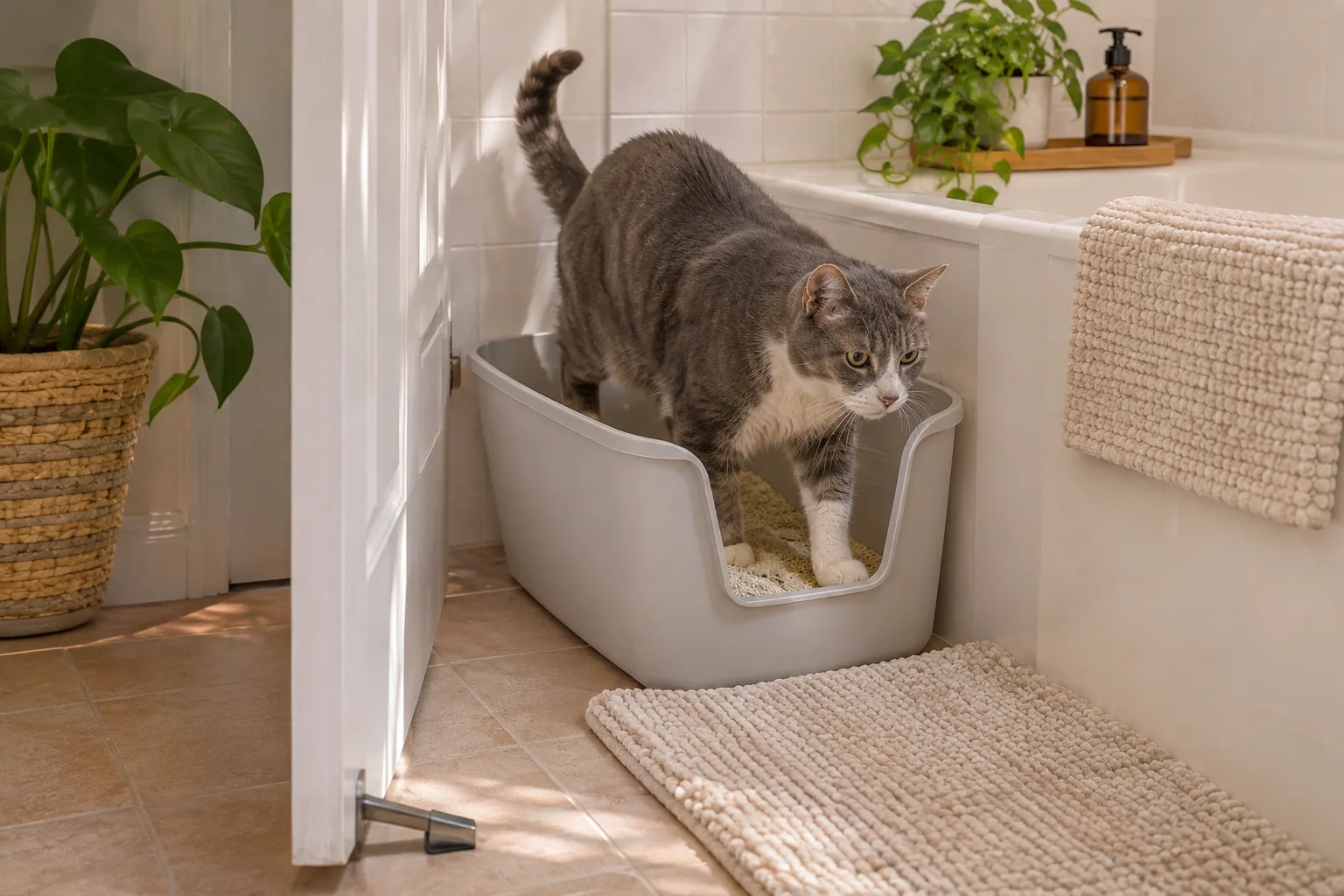
Where to put a litter box in a small apartment
- Keep it away from food and water. Cats don’t like to eliminate where they eat. Opposite sides of the room is the minimum.
- Bathroom is fine, if the door stays open. Use a door stop so the door can’t swing shut and trap your cat out (or in).
- Avoid noisy appliances. A washer that suddenly spins can scare a cat off a box for good.
- Give it an escape route. Cats feel safer when they can see who’s coming and have a way out, which matters more in multi-pet homes.
- One box per cat, plus one, is the standard guideline. In a studio with two cats, that’s three boxes. If that’s impossible, at least make sure two cats never have to share one box.
When to call your vet: if your cat suddenly starts going outside the box, strains in the box, goes very often with little output, or you see blood in the urine, don’t blame the box. These can be signs of a urinary problem, and a urinary blockage is an emergency in male cats. This guide is general information, not veterinary advice.
How to keep a small apartment from smelling like litter
- Scoop at least once a day. Odor builds fastest from urine clumps left sitting.
- Keep about 2 inches of litter so urine clumps fully instead of pooling on the bottom of the pan.
- Use unscented clumping litter. Many cats dislike heavy fragrance, and perfume doesn’t fix odor, it just covers it.
- Wash the pan with plain soap and water when you change all the litter, and replace plastic boxes once they get scratched, because scratches hold odor.
- Add a litter mat at the exit to catch tracked litter before it spreads.
FAQ
What size litter box do I need for an apartment?
The same size you’d need anywhere else: at least 1.5 times your cat’s length from nose to base of tail. Apartments change the shape and placement you choose, not the size your cat needs.
Can I keep a litter box in my bedroom?
Yes, many studio owners have to. Choose a covered or top-entry box, scoop daily, and keep it as far from the bed and from your cat’s food as you can.
Are self-cleaning litter boxes good for small apartments?
They can be, but most are bulky, need an outlet, and make noise when they cycle, which you’ll hear in a small space. They also only work with certain litters. If you’re considering one, check its full dimensions (with the waste drawer open) before buying.
How many litter boxes do I need for two cats in an apartment?
The guideline is three (one per cat plus one). If space truly doesn’t allow it, two boxes in different spots is the realistic minimum.
Sources
- AAFP and ISFM Guidelines for Diagnosing and Solving House-Soiling Behavior in Cats, Journal of Feline Medicine and Surgery (2014).
- Grigg EK, Pick L, Nibblett B. Litter box preference in domestic cats: covered versus uncovered. Journal of Feline Medicine and Surgery (2013).
- Cornell Feline Health Center, guidance on litter box problems.
- Product dimensions, ratings and owner feedback from Amazon.com listings, checked November 2026.

PurrScout Editorial Team
We research cat products and care topics using manufacturer documentation, veterinary guidance and thousands of real owner reviews. We never claim hands-on testing we didn't do. How we research.