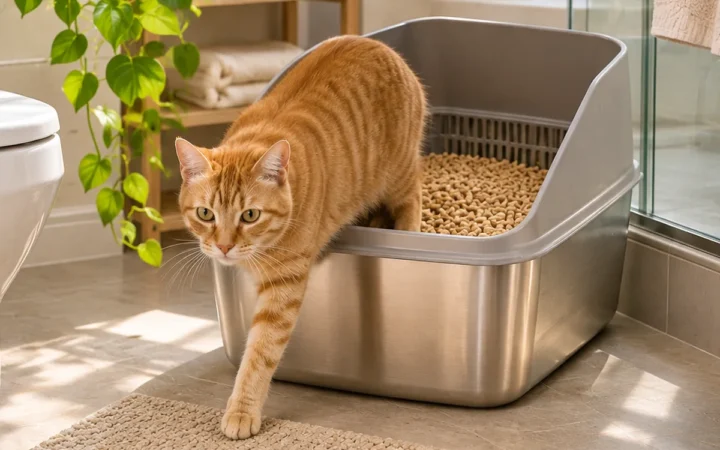

Ammonia smell comes from bacteria breaking down old urine. If the box still smells right after you scoop, the urine has usually soaked into scratched plastic, saturated litter, or too-shallow litter. Fix it by keeping 2 to 3 inches of unscented clumping litter, scooping at least daily, doing a full litter change every 2 to 4 weeks, and replacing a scratched box. If the smell is suddenly much stronger than usual, it can be a health sign, so check in with your vet.
A litter box that smells a little like a litter box is normal. A box that hits you with a sharp, eye-watering ammonia smell, even an hour after you cleaned it, is telling you something specific. The good news: it’s almost always one of a handful of causes, and you can work through them in a weekend.
How we researched this guide
This guide is based on published veterinary guidance (AAFP/ISFM house-soiling guidelines, Cornell Feline Health Center), peer-reviewed research on litter box use, and the recurring complaints and fixes we found in thousands of owner reviews of litters and boxes. We are not vets, and nothing here replaces a vet exam if your cat’s urine or habits change.
Where the ammonia smell actually comes from
Fresh cat urine doesn’t smell strongly of ammonia. Cat urine contains a lot of urea, and when it sits, bacteria break that urea down into ammonia. The longer urine sits in the box, and the more places it can hide, the stronger that sharp smell gets.
That’s why the smell sticks around after scooping. You removed the clumps, but some urine is still somewhere the scoop can’t reach: under the litter on the bottom of the pan, inside scratches in the plastic, in broken-up clumps mixed through the litter, or in the litter itself once it’s saturated.

9 reasons your litter box smells like ammonia (and the fix for each)
1. The litter is too shallow
With only an inch of litter, urine runs straight to the bottom of the pan and pools there instead of forming a solid clump. You scoop the top and leave a wet layer behind. Fix: keep clumping litter about 2 to 3 inches deep. Many cats also prefer that depth for digging.
2. You scoop too rarely
Every hour a urine clump sits, the bacteria keep working. Studies of litter box behavior also show cats notice a used box, and some will avoid it. Fix: scoop at least once a day, twice if you have more than one cat or a small, enclosed space.
3. The litter is overdue for a full change
Scooping never removes everything. Small broken clumps and urine-soaked dust build up in the remaining litter. Fix: for clumping litter, dump everything and refill about every 2 to 4 weeks (sooner with several cats). Non-clumping litter usually needs a full change at least weekly because it can’t separate the urine from the clean litter.
4. The plastic box is old and scratched
This is the most common “but I just cleaned it” cause. Years of digging leave fine scratches in plastic, and those grooves hold urine and bacteria that a quick wipe won’t remove. Fix: if the bottom looks dull or scratched and still smells after washing, replace the box. Many owners replace plastic pans about once a year. Stainless steel boxes don’t scratch the same way, which is why people with odor problems often switch to them.
5. Clumps break apart when you scoop
Weak clumps crumble, and the urine-soaked crumbs fall back into the clean litter. Fix: switch to a hard-clumping, unscented clay litter, or a litter designed for odor control. If dust is also a problem in your home, see our guide to low-dust litters for cats with asthma.
6. There aren’t enough boxes
The common guideline is one box per cat, plus one. When two cats share one box, it gets used twice as often and saturates twice as fast. Fix: add a box, ideally in a different spot.
7. A covered box with no airflow
Hoods keep odor away from you, but they also trap it inside, right where your cat’s nose is. A peer-reviewed study found that most cats didn’t have a strong preference between covered and open boxes, but a covered box only works if you scoop it as often as an open one. Fix: scoop daily, wash the hood when you change the litter, and replace any carbon filter on schedule.
8. You’re washing with the wrong cleaner
Ammonia-based household cleaners can leave a smell that reminds cats of urine. And never mix bleach with anything containing ammonia, because the combination releases toxic fumes. Fix: wash the empty box with hot water and plain unscented dish soap. For accidents outside the box, use an enzyme cleaner made for pet urine, since it breaks down the compounds that cause the smell.
9. The smell is coming from your cat, not the box
If you’ve fixed everything above and the urine itself smells unusually strong, the cause may be your cat’s health or hydration. Very concentrated urine smells stronger. That can come from not drinking enough (common in cats on dry food only), and also from medical problems. Intact male cats also naturally have much stronger-smelling urine. See the vet section below.
A simple routine that keeps ammonia away
- Daily: scoop all clumps and waste. Top up the litter so it stays 2 to 3 inches deep.
- Every 2 to 4 weeks: empty the whole box, wash it with hot water and unscented dish soap, dry it fully, and refill with fresh litter.
- Every few months: check the bottom for scratches. If the clean, dry box still smells, replace it.
- Always: one box per cat plus one, in a spot with some airflow, away from food and water.
Small apartment? Odor builds faster in a small space. Daily scooping matters even more, and a box style that keeps litter inside helps too. See our picks for the best litter boxes for small apartments.
Do baking soda, scented litter and air fresheners help?
Baking soda can absorb some odor. A thin layer under the litter is a common, inexpensive trick, but it won’t fix any of the causes above on its own.
Scented litters and fresheners cover the smell for you, but many cats dislike strong fragrance, and a box that smells perfumed to them can lead to them going somewhere else. Most vet guidance recommends unscented litter. If you want extra odor control, look for unscented litters with activated charcoal or similar odor absorbers instead of perfume.
Plug-in air fresheners next to the box have the same problem. Better airflow (an open door, a small fan in the room, not right at the box) does more.
When the ammonia smell is a reason to call the vet
Call your vet promptly if the urine smell is suddenly much stronger than normal and you see any of these: your cat is peeing more or less than usual, straining or crying in the box, going in small amounts often, peeing outside the box, drinking a lot more water, or you see blood in the urine. Changes like these can be linked to urinary tract problems, kidney disease, diabetes or bladder stones. A male cat straining to pee with little or nothing coming out is an emergency, because a urinary blockage can become life-threatening within a day or two. This guide is general information, not veterinary advice.
FAQ
Why does my litter box smell like ammonia right after I clean it?
Urine is still trapped somewhere you can’t see: scratches in the plastic, the bottom of the pan under shallow litter, or saturated old litter. Wash the empty box, refill with 2 to 3 inches of fresh litter, and replace the box if it still smells when clean and dry.
Is the ammonia smell from a litter box harmful?
In a well-ventilated home with a box that’s scooped daily, ammonia levels are low. A strong, constant ammonia smell means the box needs attention, and it’s unpleasant for your cat’s sensitive nose too. Fixing the cause is better than masking it.
How often should I completely change cat litter?
For clumping litter, about every 2 to 4 weeks with daily scooping, more often with several cats. For non-clumping litter, about once a week or whenever it looks or smells saturated.
Do automatic litter boxes smell like ammonia?
They can. The rake only removes clumps, so the litter still needs regular full changes, and the waste drawer needs emptying before it gets full. Check the manufacturer’s recommended litter, because the wrong one can stick to the parts and smell.
Does dry food make cat urine smell stronger?
Cats on dry food only often drink less overall, which can make urine more concentrated and stronger smelling. Adding wet food or a water fountain can help many cats drink more. Talk to your vet before making big diet changes.
Sources
- AAFP and ISFM Guidelines for Diagnosing and Solving House-Soiling Behavior in Cats, Journal of Feline Medicine and Surgery (2014).
- Cornell Feline Health Center, guidance on litter box problems and feline lower urinary tract disease.
- Grigg EK, Pick L, Nibblett B. Litter box preference in domestic cats: covered versus uncovered. Journal of Feline Medicine and Surgery (2013).
- Ellis JJ, McGowan RTS, Martin F. Does previous use affect litter box appeal in multi-cat households? Behavioural Processes (2017).
- Recurring owner feedback on litters and litter boxes from Amazon.com reviews, read November 2026.

PurrScout Editorial Team
We research cat products and care topics using manufacturer documentation, veterinary guidance and thousands of real owner reviews. We never claim hands-on testing we didn't do. How we research.